Hind-Leg Strengthening Exercises for Dogs With Hip Dysplasia
Exercise cannot reshape a dysplastic hip, but strong gluteal and thigh muscle around the joint reduces strain and visibly improves daily comfort. Veterinary rehabilitation for hip dysplasia centres on short, regular, low-impact strengthening: sit-to-stands, controlled incline work, weight shifts, and balance standing, paired with lean body weight. Confirm any program with your vet first.
Why does muscle matter so much for dysplastic hips?
A dysplastic hip is a loose, poorly fitting joint. Every kilogram of body weight and every wasted muscle fibre makes that looseness more expensive. Strong gluteals, quadriceps, and hamstrings act like living joint stabilisers, absorbing load the joint cannot. That is why modern veterinary rehabilitation treats strengthening, alongside weight control, as the core of non-surgical hip dysplasia management.
The five foundation exercises
- 1. Slow sit-to-stands. A square sit, a controlled stand, repeat. Commonly 3 to 5 repetitions building toward 10, once or twice daily. Slow matters: momentum is the enemy of muscle.
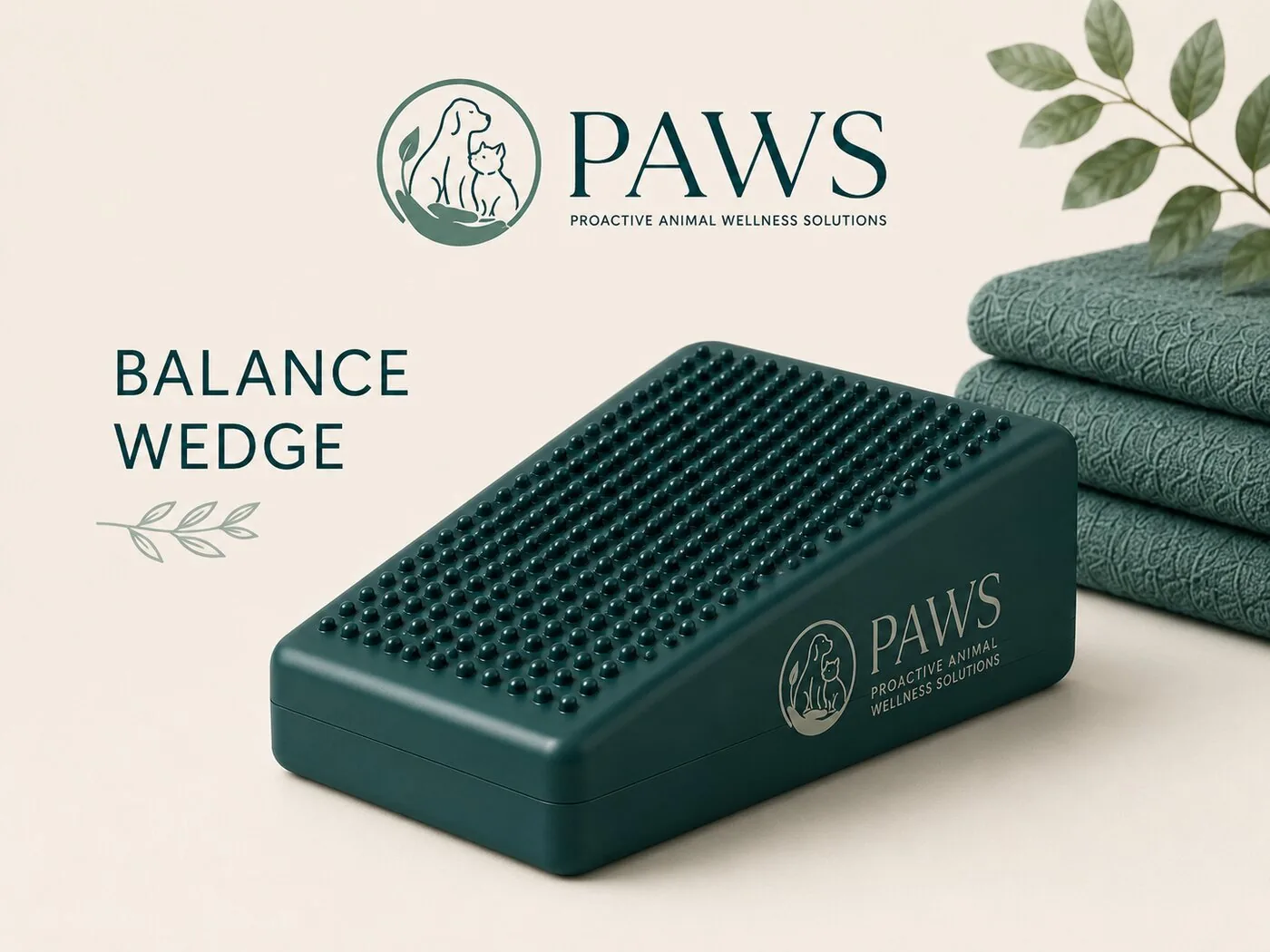
- 2. Front-paws-up holds. Front paws on a low step or firm wedge, held 5 to 10 seconds. This shifts weight onto the hind legs, loading exactly the muscles dysplastic hips need. 3 to 5 holds daily.
- 3. Controlled weight shifts. With your dog standing square, gently rock the hips side to side so each hind leg loads and releases in turn. 5 to 8 shifts per side.
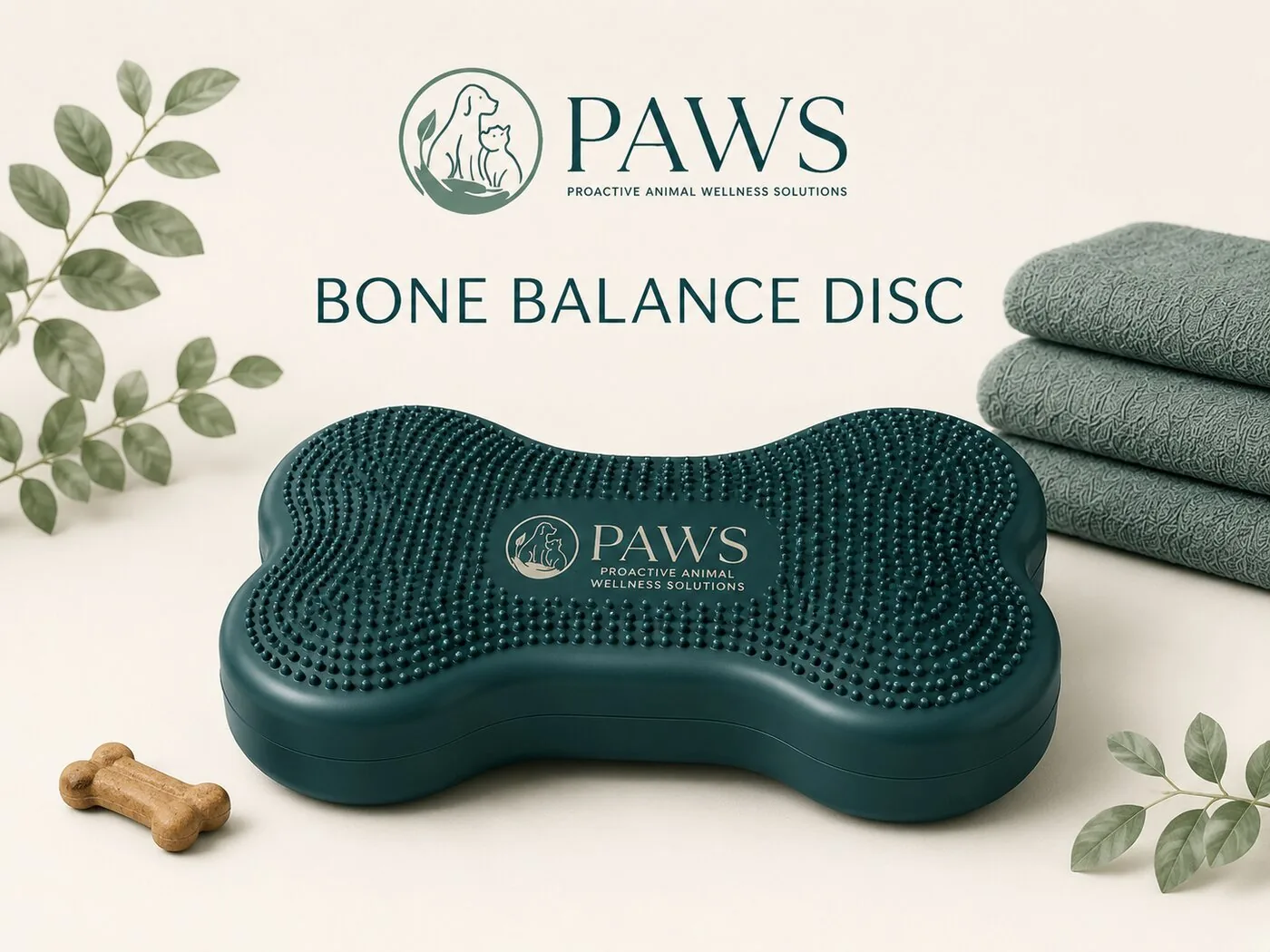
- 4. Balance standing. Quiet standing on a low, slightly unstable platform such as a bone balance disc makes the deep stabiliser muscles work without any impact. Start with seconds, build to a minute or two.
- 5. Slow hill or cavaletti walking. Slow leash walks up a gentle slope, or stepping over low obstacles spaced a stride apart, encourage active hip flexion and even loading (our agility hurdle set at its lowest setting is built for exactly this). A few minutes is plenty.
Short and daily beats long and occasional. Five to ten minutes most days is a realistic, effective dose for most dogs.
What should dogs with hip dysplasia avoid?
High-impact repetition: ball launchers, frisbee leaps, dog-park sprint sessions, jumping in and out of vehicles, and skidding turns on slick floors. None of these build useful muscle, and all of them tax the joint. Swap them for the structured work above plus sniffy leash walks; most dogs consider that a fair trade once food is involved.
What about weight, floors, and furniture?
Lean body condition is the single most powerful thing an owner controls; even modest excess weight measurably worsens dysplastic joints. At home, lay traction along your dog's main routes, add a ramp or steps for furniture and cars, and raise food bowls slightly so your dog is not loading the front end awkwardly. Small changes, repeated thousands of times a year, add up.
When should we involve a professional?
See your vet before starting, and ask for a referral to a canine rehabilitation professional if your dog is painful, very weak, young with severe dysplasia, or not improving after a few weeks of consistent work. Hydrotherapy, especially underwater treadmill work, is a superb muscle-builder for dysplastic dogs because the water carries the weight while the legs do the work.
Owners also ask
Can exercise fix hip dysplasia?
No. Dysplasia is a structural problem, and no exercise reshapes the joint. What strengthening does is build the muscle that stabilises the joint, which reduces strain and often visibly improves comfort and mobility. It manages the condition; it does not cure it.
How much walking is right for a dog with hip dysplasia?
Several short, slow leash walks usually beat one long outing. Many dogs do well with 15 to 20 minute walks once or twice daily, adjusted to what leaves them comfortable that evening and the next morning.
My puppy is at risk of hip dysplasia. Should we do these exercises?
Puppies are a special case: growing joints should not do repetitive strengthening drills. Focus on free play on grass, no forced running, lean body weight, and your vet's guidance. Structured strengthening belongs after the growth plates close.
Do supplements or beds help too?
Ask your vet about joint supplements and pain management; evidence varies by product. Supportive bedding and a warm sleeping spot away from drafts do help stiff dogs start the day better.
A training tool for dogs, not a toy. Always supervise your dog during use, check and trim nails before sessions, and consult your veterinarian before beginning any new rehabilitation or exercise program.
The equipment behind this guide

5 Foundation Exercises for Senior Dogs
Free printable guide: five gentle, vet-informed exercises that help senior dogs keep muscle, balance, and confidence.