
Setting Up Your Home for a Dog With Back Problems
A dog with IVDD or other back problems should avoid stairs whenever possible. Use baby gates to block them and ramps for furniture and cars. Add traction to slippery floors, switch from a collar to a harness, raise food bowls slightly, and learn to carry your dog with the spine level, supporting the chest and hindquarters together.
Can a dog with IVDD use stairs?
The short answer: avoid them whenever possible. Stairs combine the two forces a compromised spine handles worst, repeated impact and a steep spinal angle, dozens of times per trip. Going down is harder on the back than going up. For dogs recovering from an IVDD episode, stairs should be off limits entirely, and for any dog with a history of back problems, the fewer stair trips for life, the better.
The practical fix is simple: baby gates at the top and bottom of every staircase, and a plan for the trips that must happen. For a few steps, carry your dog with proper support (more on technique below). For longer flights or heavier dogs, a ramp or a rearranged routine, such as moving the dog's living space to one floor, solves the problem permanently. Ask your veterinarian how strict to be for your dog's stage of recovery.
How do you fix slippery floors?
Hardwood, tile, and laminate are quietly hostile to a dog with a weak or wobbly hind end. Every slip forces a sudden twisting correction through the spine, and dogs that fear slipping move in a tense, hunched way that works against recovery.
- Lay rubber-backed runners or carpet tiles along your dog's main routes: bed to door, door to bowls, bowls to sofa area.
- Use non-slip mats at launch points: beside the bed, under the bowls, at the bottom of ramps.
- Keep nails short and paw fur trimmed, because long nails and furry paws turn even carpet into a skating rink.
- Consider toe grips or traction socks for dogs that struggle on unavoidable hard floors.
What equipment actually helps?
A handful of inexpensive changes carry most of the benefit.
- Ramps for furniture and the car. If your dog is allowed on the sofa or bed, a ramp with a gentle slope and a non-slip surface removes the jump, which is one of the highest-risk movements for a disc. A car ramp does the same for vehicle loading. Train ramp use with treats before it is needed urgently.
- A harness, not a collar. Any leash pressure on a collar travels straight into the neck and spine. A well-fitted Y-front harness spreads force across the chest. For dogs with hind end weakness, a harness with a rear handle lets you steady them without grabbing.
- Slightly raised bowls. Lifting food and water bowls a few inches reduces how far the neck and back must bend at every meal. Chest height is too high; a small raise is the goal.
- A supportive, low-entry bed. A firm orthopedic mattress your dog can walk onto, rather than climb into, supports the spine during the many hours a recovering dog spends resting.
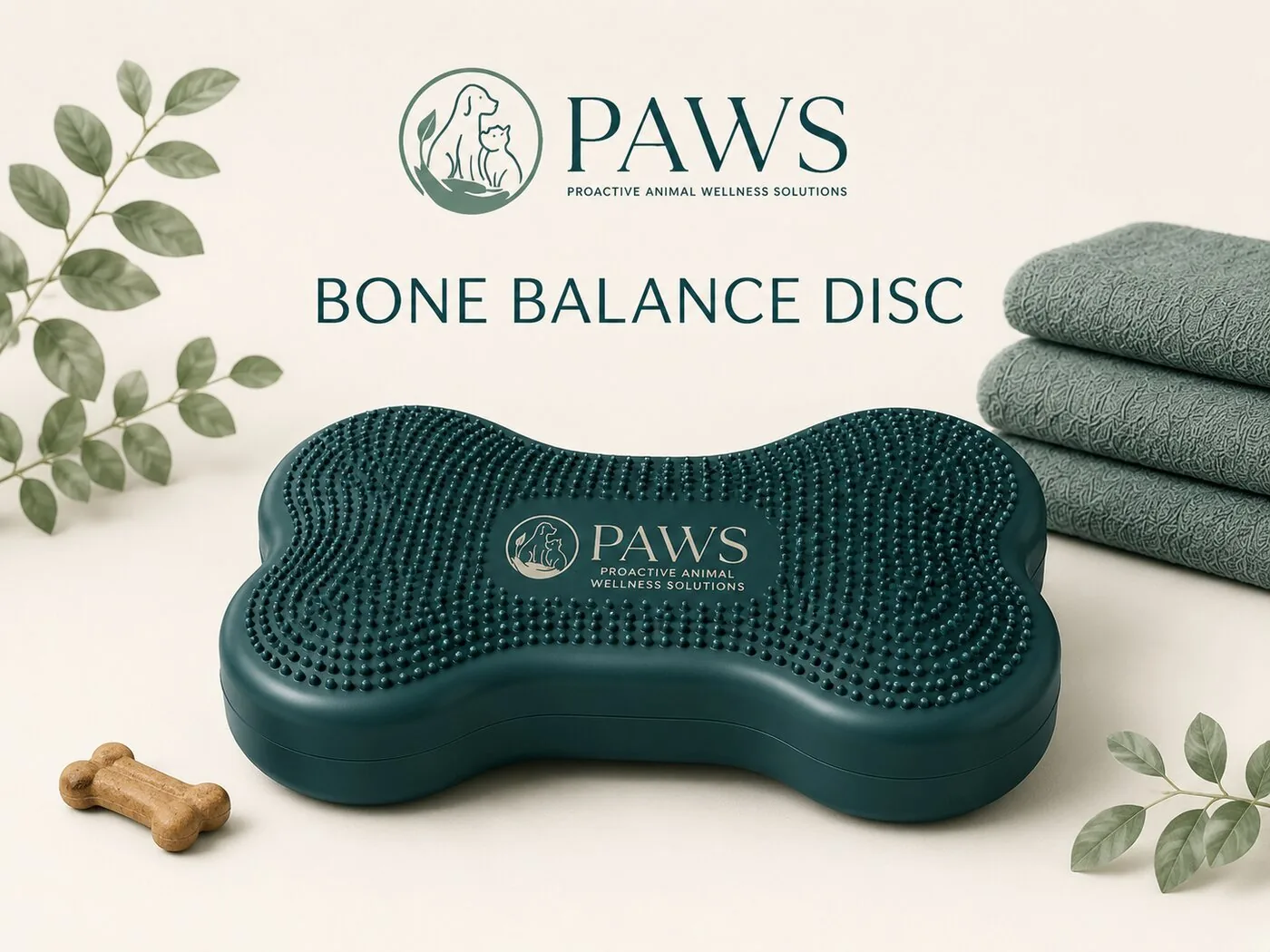
For gentle strength maintenance once your veterinarian approves activity, a low platform like the bone balance disc fits naturally into a back-safe home routine, and our guide to IVDD recovery at home shows where that work fits in the bigger recovery picture.
How do you carry a dog with a bad back?
Carrying technique matters more than most owners realize, because a scooped, curled carry bends exactly the part of the spine you are trying to protect. The rule is simple: keep the spine level, like a table.
- One arm under the chest, between the front legs, and the other arm under the hindquarters, so the back stays flat and horizontal.
- Hold your dog against your body so they feel secure and do not wriggle.
- Never lift by the front legs alone, letting the back end dangle.
- For large dogs, use two people, one at the chest and one at the hips, lifting on a count.
- Set down gently, hind feet first, onto a non-slip surface.
What does a good sleeping setup look like?
Recovering dogs sleep a lot, so the sleeping spot earns its attention. Place a firm, supportive bed on the ground floor, away from drafts and household traffic, with a non-slip mat at its edge. If your dog previously slept on your bed, the kindest change is a great dog bed beside it and a consistent no-jumping rule, backed by a ramp if your veterinarian approves bed access at all. During any strict rest phase, follow your veterinarian's confinement instructions exactly, and if your dog is recovering from surgery, our post-surgery checklist covers the recovery-space essentials.
How should you lay out your dog's daily routes?
Finally, walk your home the way your dog does. Map the handful of trips they make every day, bed to door, door to yard, bowls to resting spot, and make each route flat, grippy, and jump-free. Move bowls off slippery tile, block the basement stairs, put the ramp where the sofa jump used to happen. A dog's spine does not get hurt on average days; it gets hurt in one bad second on a slick floor or a hard landing. Good layout quietly deletes those seconds from your dog's day, which is the cheapest protection you will ever buy.
Owners also ask
Can a dog with IVDD go up and down stairs?
Avoid stairs whenever possible. They combine repeated impact with a steep spinal angle, and going down is especially hard on the back. Block staircases with baby gates, carry your dog with the spine level for short flights, and rearrange routines so stair trips are rarely needed. Ask your veterinarian how strict to be for your dog's stage of recovery.
How do I carry a dog with back problems?
Keep the spine level like a table. Place one arm under the chest between the front legs and the other under the hindquarters, then hold your dog against your body. Never lift by the front end alone with the back legs dangling. For large dogs, use two people, one at the chest and one at the hips. Set down hind feet first on a non-slip surface.
Should a dog with IVDD wear a harness or a collar?
A harness. Leash pressure on a collar transfers directly into the neck and spine, which a dog with disc disease cannot afford. Choose a well-fitted Y-front harness that spreads force across the chest, and consider one with a rear handle if your dog has hind end weakness, so you can steady them without grabbing the back.
Do raised bowls help dogs with back problems?
A modest raise helps by reducing how far the neck and back bend at every meal, which adds up over thousands of feedings. Lift bowls a few inches so your dog eats with a more neutral spine, but avoid chest-height feeders. Pair the bowls with a non-slip mat so the front feet do not slide while eating.
A training tool for dogs, not a toy. Always supervise your dog during use, check and trim nails before sessions, and consult your veterinarian before beginning any new rehabilitation or exercise program.
The equipment behind this guide
Dog Post-Surgery Recovery Checklist
Free printable checklist: how to prepare your home, week-by-week recovery reminders, and the warning signs that mean call your vet.