
TPLO Recovery Exercises, Week by Week
TPLO recovery typically takes 12 to 16 weeks. The bone plateau usually heals in about 8 weeks, controlled strengthening exercises begin around weeks 5 to 8, and most dogs return to unrestricted activity around week 16, with full muscle mass taking up to 6 months. Your surgeon's protocol always overrides any general timeline, including this one.
How long does TPLO recovery take?
Most dogs follow a similar arc: about 2 weeks of strict rest and incision care, controlled leash walking from weeks 3 to 4, structured strengthening from weeks 5 to 8 once the surgeon confirms healing is on track, and a gradual return to off-leash life across weeks 9 to 16. X-rays around week 8 typically confirm whether the bone has healed enough to progress. Muscle takes longest of all: expect up to 6 months before the operated leg matches its pre-surgery strength.
Weeks 1 to 2: protect and rest
Your only jobs right now are comfort, incision care, and preventing the moments that undo surgery: no stairs, no jumping, no furniture, no slippery floors. Bathroom breaks happen on a short leash and go straight back inside. Many surgeons prescribe gentle passive range-of-motion movements and icing in the first days; do these exactly as your surgical team demonstrated, and skip them if you were not shown how.
Set the recovery space up before your dog comes home: a crate or small pen, non-slip mats along every route your dog walks, and the cone ready. Our free Post-Surgery Recovery Checklist covers the full setup.
Weeks 3 to 4: controlled walking begins
With your surgeon's approval, short and slow leash walks usually start here, often 5 to 10 minutes and building gradually. Slow is the point: a slow walk makes your dog actually use the healing leg instead of skipping on three. Watch for consistent weight-bearing on the operated leg; that milestone, usually around weeks 3 to 4, is what unlocks early strengthening work.
Weeks 5 to 8: rebuilding strength
This is the window where many rehabilitation protocols introduce structured exercises, always on non-slip footing:
- Sit-to-stands. Slow, square sits and controlled stands, commonly built up to around 10 repetitions, a few times daily. The canine squat.
- Weight shifts. With your dog standing square, gently rock the hips or shoulders so weight moves onto the operated leg and off again.
- Three-leg stands. Lift a healthy leg for 10 to 15 seconds so the operated leg has to carry more.
- Gentle balance work. Standing with front or rear paws on a slightly unstable surface, like a balance doughnut with a stabilising base, wakes up the stabiliser muscles that atrophied during rest.
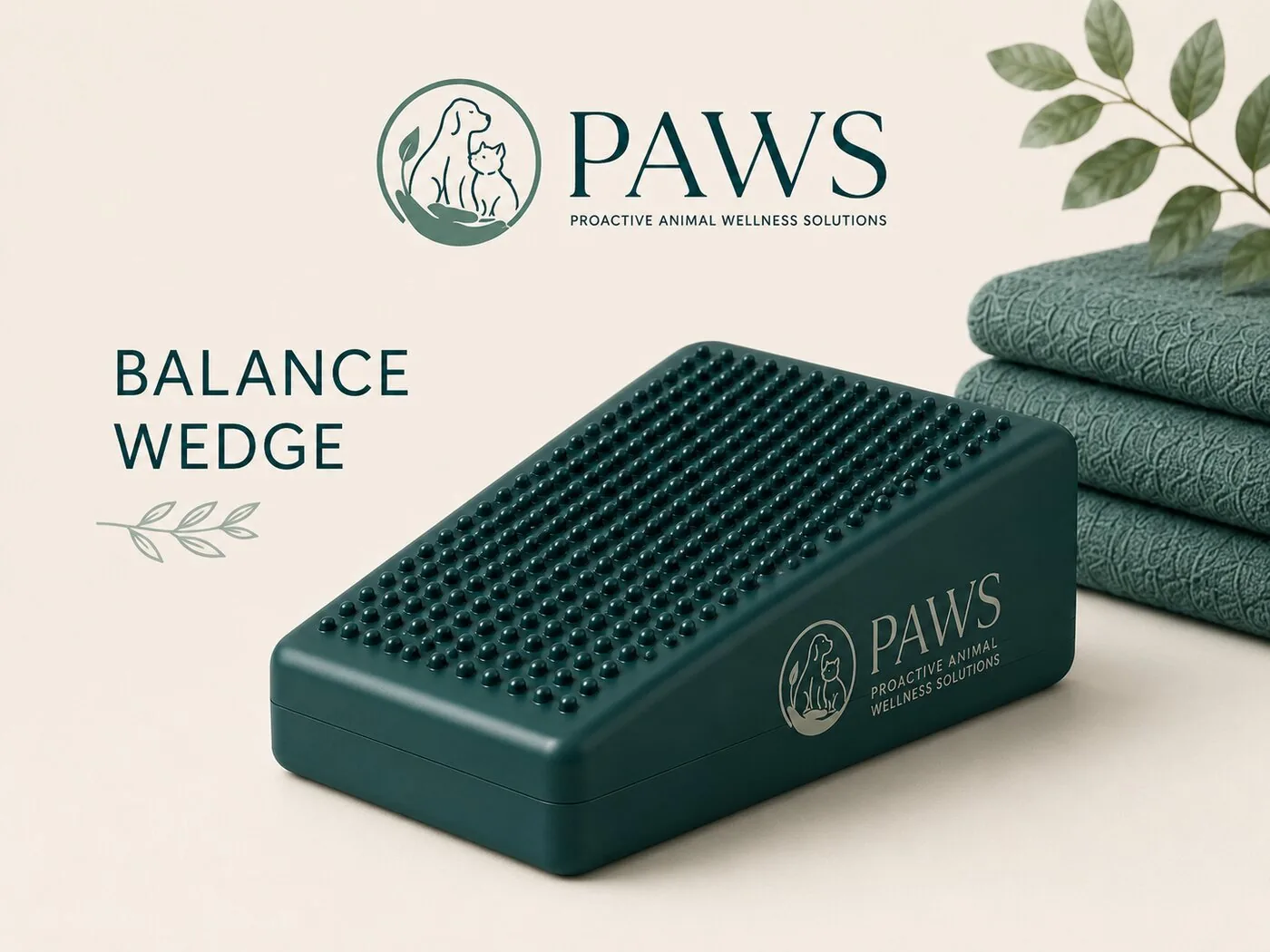
- Front-paws-up holds. Front paws on a low wedge or step shifts load to the rear legs, exactly where TPLO dogs need it.
Walks typically extend toward 20 to 30 minutes, 2 to 3 times daily, by the end of this window. Ask your rehab professional before adding any of these; the right start date depends on your dog's x-rays, not the calendar.
Weeks 9 to 16: back to real life, gradually
After the week-8 recheck confirms bone healing, off-leash time usually returns in small doses: around 5 minutes a few times daily at first, adding roughly 5 minutes per week. Controlled trotting, gentle hills, and figure-eight walking build coordination. Most dogs reach unrestricted activity around week 16. Resist the urge to celebrate early; re-injury weeks 9 to 12 usually happens because a dog felt fine before the leg was strong.
What should we avoid, and for how long?
Until your surgeon clears them: ball chasing, frisbee, dog park wrestling, stairs at speed, jumping into cars or onto beds, and any hard turn on slick flooring. These are the classic re-injury moments, and they are also the reason roughly half of dogs who tear one CCL eventually strain the other. Controlled strengthening of both hind legs is the best protection you can give that other knee.
When should I call the surgeon?
Call promptly for swelling or discharge at the incision, a sudden return to toe-touching or carrying the leg after weight-bearing was established, a yelp or lameness after a slip, or any decline that lasts more than a day. Quick questions are cheap; missed complications are not.
Owners also ask
When can my dog climb stairs after TPLO surgery?
Most protocols restrict stairs for at least the first 4 to 6 weeks, then reintroduce them slowly on leash. Ask your surgeon for your dog's specific timeline; it depends on healing confirmed by x-ray, not on how eager your dog looks.
Can my dog walk too much during TPLO recovery?
Yes. Overdoing walks is the most common owner mistake. Length matters less than control: short, slow, frequent leash walks beat one long outing every time. If your dog is more lame in the evening than the morning, the day was too big.
When is off-leash play safe again?
Usually from around week 9, in 5-minute doses, only after x-rays confirm bone healing, and building gradually to normal activity around week 16. Off-leash before radiographic healing is how implants get tested the hard way.
Do I need a professional rehab therapist, or can I do this at home?
Both help. A canine rehabilitation professional gives you a plan matched to your dog and catches problems early; the daily repetitions still happen at home. If professional rehab is not accessible, ask your surgical team to demonstrate each home exercise before you start.
A training tool for dogs, not a toy. Always supervise your dog during use, check and trim nails before sessions, and consult your veterinarian before beginning any new rehabilitation or exercise program.
The equipment behind this guide


Dog Post-Surgery Recovery Checklist
Free printable checklist: how to prepare your home, week-by-week recovery reminders, and the warning signs that mean call your vet.