
Weight Management for Arthritic Dogs: The Most Powerful Comfort Tool You Control
Excess weight measurably worsens arthritis, and weight loss is the single most effective intervention an owner controls for an arthritic dog's comfort. Learn a basic rib check, count every treat, feed through food puzzles, and swap intensity for low-impact movement like sniffy walks. Ask your vet for a target weight and a plan, and expect steady progress over months, not weeks.
Why does weight matter more than any supplement?
Because it is the one factor with strong, repeatable evidence behind it and full owner control in front of it. Excess weight worsens arthritis in two ways at once: it multiplies the load on every sore joint with every step, and fat tissue itself releases inflammatory signals that add to joint discomfort. Studies in arthritic dogs have shown visible improvement in lameness after even modest weight loss. No supplement on the shelf can match that reliability. If your arthritic dog is overweight, weight loss is the most effective thing you personally control, so ask your veterinarian for a target weight and take that number as seriously as any prescription.
How do I check body condition at home?
Vets use body condition scoring, and the home version takes ten seconds. Run flat fingers along your dog's ribcage. You should feel each rib easily under a thin covering, roughly the way you feel the bones on the back of your own hand. If you have to press to find ribs, there is excess padding. From above, your dog should show a visible waist behind the ribs; from the side, a tucked-up belly rather than a straight line. Coat can hide a great deal, so trust your hands over your eyes, and ask your vet to score your dog at the next visit so you both share a baseline.
Where do the extra calories hide?
Almost never in the food bowl. They hide in the biscuit at the counter, the dental chew at lunch, the toast crust, and the training treats nobody logs.
- Count everything for three days. Every treat, chew, and table scrap goes in a notebook. Most owners are surprised by the total.
- Pay treats from the daily ration. Set aside part of the measured food as the day's treat budget instead of adding extras on top.
- Shrink, do not stop. Halve treat sizes. Dogs count events, not grams, and a pea-sized reward lands the same as a large one.
- Align the household. One family member free-feeding quietly undoes everyone else's discipline.
What movement burns energy without hurting joints?
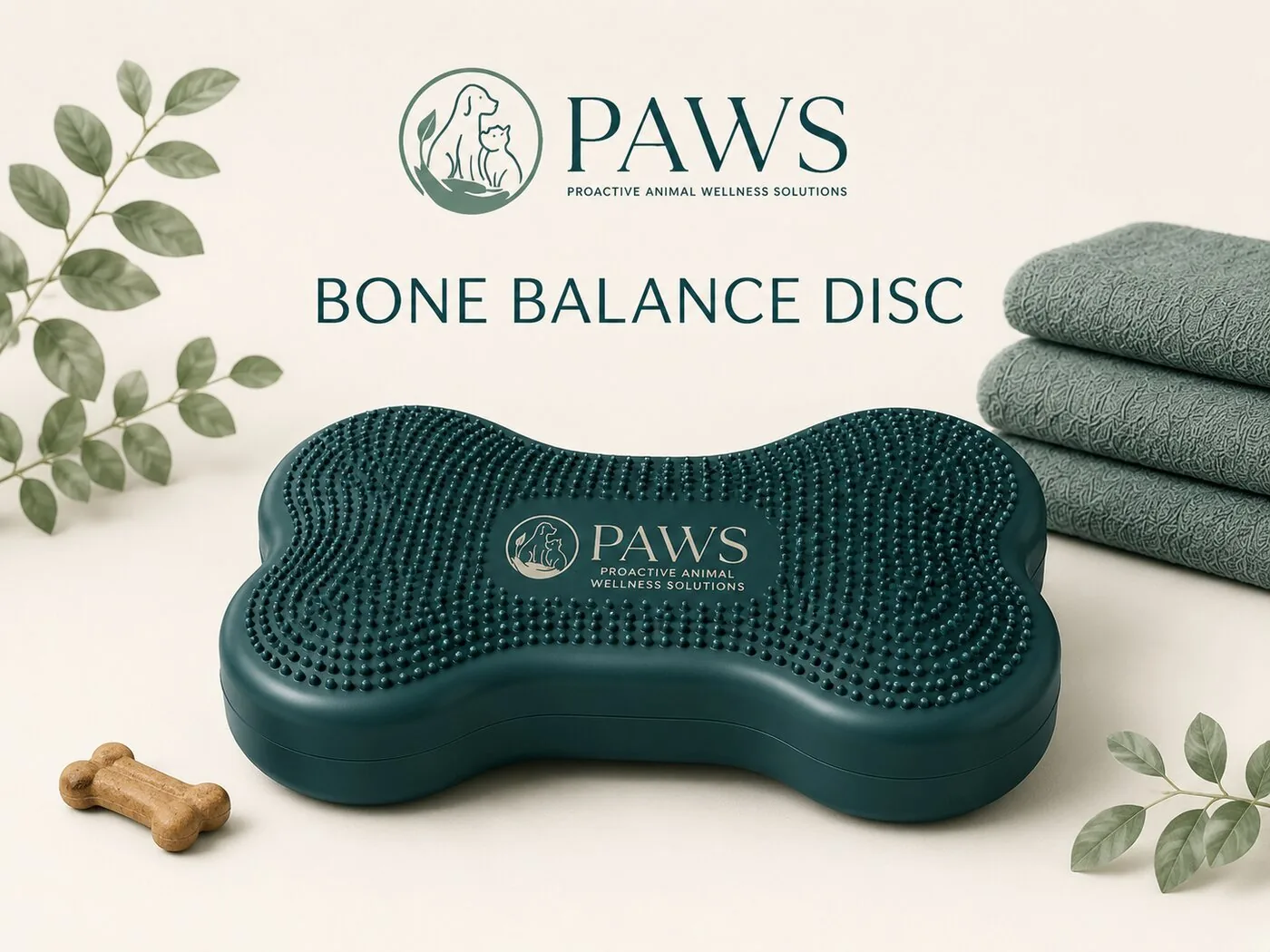
Stiff dogs cannot run the weight off, and should not try. The kind combination is more frequent low-impact movement plus fewer calories. Longer slow sniffy walks, swimming where available, and short daily strength sessions all spend energy at a joint-friendly pace. Gentle work such as slow sit-to-stands and quiet standing on a low bone balance disc also helps maintain the muscle that supports arthritic joints while the weight comes down, and supported standing over a physio peanut roll suits weaker dogs. Our hind-leg strengthening guide and free senior dog exercise guide both slot neatly into a weight-loss plan.
Can the feeding style itself help?
Yes, more than it gets credit for. Food puzzles and snuffle mats slow eating, stretch a smaller ration into a longer experience, and add gentle movement to every meal. Scatter-feeding kibble across the lawn turns dinner into a short sniffy walk. None of these tools cut calories by themselves, but they make a reduced ration feel like more food and more fun, which is half the battle with a food-motivated dog and a soft-hearted owner. They also fill the time a begging dog would otherwise spend staring at you.
What pace is realistic?
Safe canine weight loss usually runs around one to two percent of body weight per week, which means months, not weeks, for a meaningful change. Ask your veterinarian for a target weight, a measured daily ration, and a weigh-in schedule; many clinics offer free weight checks and structured diet plans. Expect plateaus, and adjust with your vet rather than crash-cutting food, because rapid restriction costs muscle as well as fat. The payoff arrives steadily: easier rising, longer comfortable walks, and a dog that moves like a younger version of themselves. Very few owners regret the effort once they see it.
Owners also ask
How much weight loss actually helps an arthritic dog?
Research in overweight arthritic dogs found visible improvement in lameness with losses in the range of six to nine percent of body weight, which for many dogs is only a kilogram or two. You do not need to reach an ideal silhouette before comfort improves. Ask your vet for a target weight and celebrate the early milestones on the way there.
Should I switch to a prescription weight-loss food?
Sometimes, especially for dogs with a lot to lose, because these diets keep protein and nutrients adequate while calories drop. Simply feeding much less of a normal food can leave gaps and cost muscle. Your veterinarian can advise whether a portion-controlled version of the current diet or a dedicated weight-management food fits your dog better.
My dog begs constantly on a diet. What helps?
Spread the same ration across more, smaller events: puzzle feeders, snuffle mats, scatter feeding, and a saved portion for the moments begging peaks. Low-calorie vegetables such as green beans or carrot can bulk meals if your vet approves. Begging usually fades within a couple of weeks once the household stops paying it with food.
Can supplements replace weight loss for arthritis?
No. Evidence for most joint supplements is mixed, while the evidence that excess weight worsens arthritis and that weight loss improves comfort is strong and consistent. Supplements may have a place alongside a plan your vet recommends, but they work at the margins. Weight, exercise, and veterinary pain management do the heavy lifting, in that order of owner control.
A training tool for dogs, not a toy. Always supervise your dog during use, check and trim nails before sessions, and consult your veterinarian before beginning any new rehabilitation or exercise program.
The equipment behind this guide

5 Foundation Exercises for Senior Dogs
Free printable guide: five gentle, vet-informed exercises that help senior dogs keep muscle, balance, and confidence.