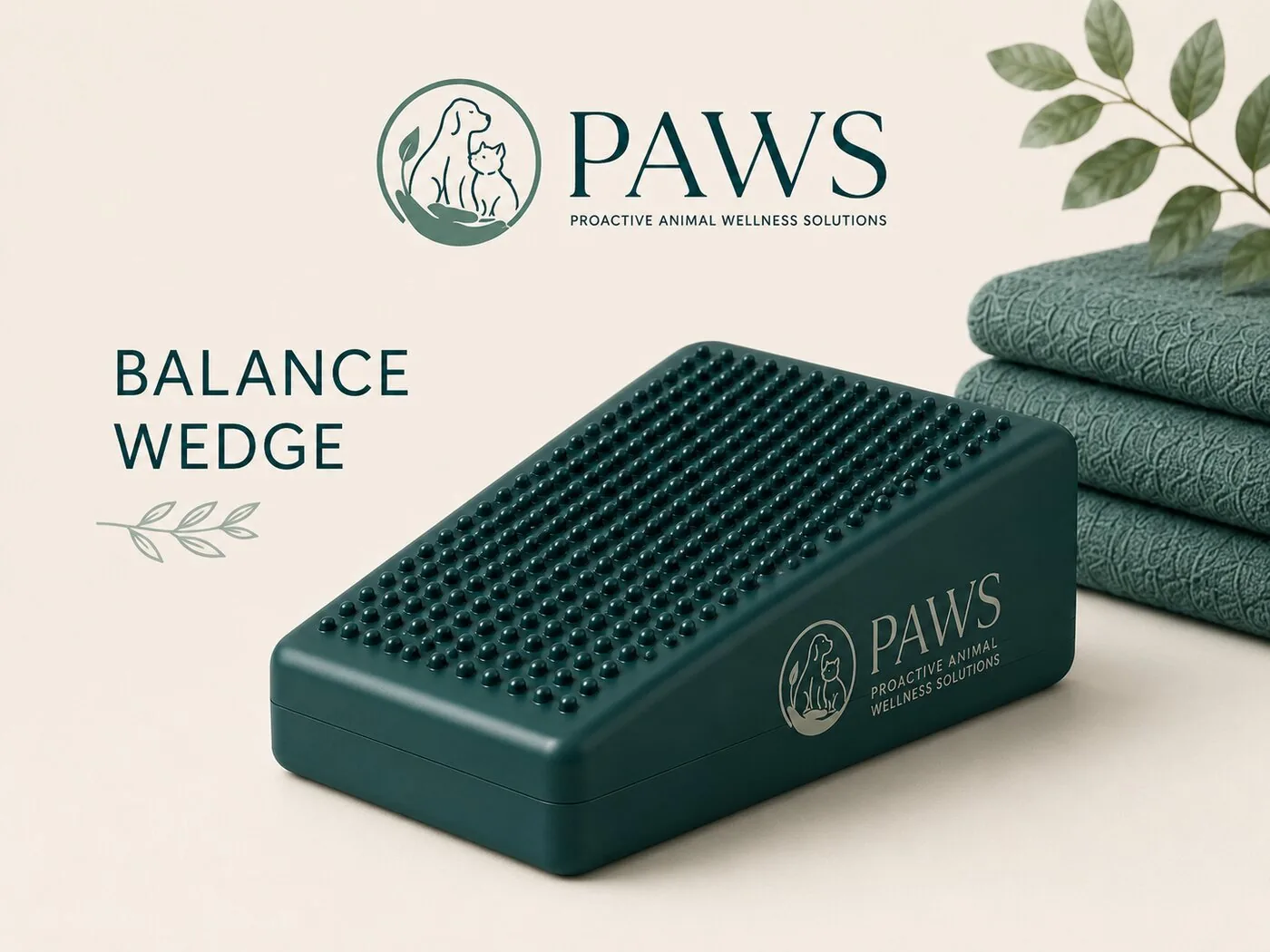
Balance Wedge: targeted strength for weak or healing limbs
After an injury, dogs are experts at cheating: they quietly shift weight off the healing leg and let the strong ones do the work, and the weak limb stays weak. The wedge takes that option away, gently. Its firm incline shifts your dog's weight onto the limbs you need to strengthen, so every session loads exactly the muscles the recovery plan calls for.
A firm incline wedge that shifts weight onto specific limbs, ideal for targeted strengthening, controlled stretching, and gradual, measurable rehabilitation progress. Its compact, stable form makes precise work simple.
- Targets individual limb loading
- Encourages controlled stretching
- Firm, stable incline for precise work
- Textured top for grip and stimulation
- Compact and easy to store
- Partner-run company in Ontario, Canada. Real people reply within one to two business days.
- The same industry-standard equipment used by rehabilitation professionals.
- Clinics and retailers: available wholesale with your own custom branding.
Details
- Best for
- Targeted rehab
- Level
- Beginner to Advanced
- Form
- Firm incline wedge
- Surface
- Textured, non-slip
Guides that use this equipment
A training tool for dogs, not a toy. Always supervise your dog during use, check and trim nails before sessions, and consult your veterinarian before beginning any new rehabilitation or exercise program.
Is the Balance Wedge right for your dog?
Hind-limb strengthening
Front-paws-up positioning shifts load to the rear legs, a staple in hip and stifle programs.
Front-limb and shoulder work
Reverse the position to load the front end instead.
Early rehabilitation
Fully firm and stable, so it suits dogs not yet ready for wobble.
Dog sizes
All sizes; the low incline is manageable even for small or short-legged breeds.
Owners often ask
How does a wedge help with hip dysplasia?
Dogs with hip conditions often under-use their rear legs. Standing with front paws elevated on the wedge shifts more body weight onto the hind limbs, which is how rehab professionals build rear-end strength gradually. Use it as part of a program your vet or rehab professional recommends.
Is the wedge stable enough for a dog just starting rehab?
Yes. Unlike inflatable equipment, the wedge is firm and does not wobble, which makes it one of the most beginner-friendly pieces in the range.
What exercises can we do on it?
Common uses include front-paws-up holds for rear-limb loading, rear-paws-up for front-limb work, controlled stepovers, and assisted stretching positions. Our upcoming digital curriculum will demonstrate each one.
Will my dog slip on it?
The top surface is textured and non-slip. As with all equipment, trim your dog's nails and start with short, supervised sessions.
Dog Post-Surgery Recovery Checklist
Free printable checklist: how to prepare your home, week-by-week recovery reminders, and the warning signs that mean call your vet.