
Dog Recovery Equipment: What Actually Helps and What Can Wait
Start with the essentials: non-slip mats, a properly sized crate or pen, a cone or recovery suit, and a supportive harness. Ramps and raised bowls can wait until your dog is moving around more. Strengthening equipment like a balance disc, wedge, or low platform earns its place from about week 5, once your veterinarian approves active rehab exercises.
What do you actually need on day one?
A handful of items do most of the work in the first two weeks, and none of them are glamorous.
- Non-slip mats or runners. The cheapest item on this list prevents the most common accident: a recovering dog slipping on hard flooring. Cover the routes between crate, door, and food.
- A properly sized crate or exercise pen. Room to stand, turn, and lie flat, but not to pace or jump. This is your dog's home base for the rest period, which is typically 10 to 14 days for soft-tissue surgery and the opening weeks of an 8 to 16 week orthopedic recovery.
- A cone or recovery suit. Licking is the main way incisions get infected. Many dogs tolerate a soft cone or bodysuit better than the classic plastic cone, so have a backup style ready.
- A supportive harness. Bathroom breaks happen on leash from day one, and a harness with a handle lets you steady your dog on steps or slick ground. For large dogs recovering from hind-end surgery, a rear support sling is worth adding.
If you only buy four things, buy these four. Our post-surgery checklist includes the full shopping list organized by recovery week.
What can wait until phase two?
Once your veterinarian approves more movement, usually around weeks 3 to 4 for orthopedic patients, a second tier of equipment becomes useful.
- Ramps for the car and, eventually, furniture. Jumping in and out of vehicles is exactly the kind of impact a recovering joint does not need, and a ramp keeps being useful for life, especially for long-backed breeds and seniors.
- Raised food and water bowls for dogs recovering from front-end or neck procedures, so mealtimes do not require awkward postures. Ask your veterinarian whether raised bowls suit your dog, since they are not right for every situation.
There is no prize for buying these early. They sit in a box during strict rest, so put the money toward the essentials first.
What strengthening equipment earns its place from week 5?
Strengthening typically starts in weeks 5 to 8 for orthopedic patients, and only with your veterinarian's approval. This is where purpose-built balance equipment starts to matter, because it lets you add small, controlled challenges that help maintain strength and support recovery.
- An inflatable disc on a stabilizing base, like the balance doughnut with base. The base keeps the wobble small and predictable, which is exactly what early rehab calls for. If you buy one piece of strengthening equipment, this is the most versatile choice.
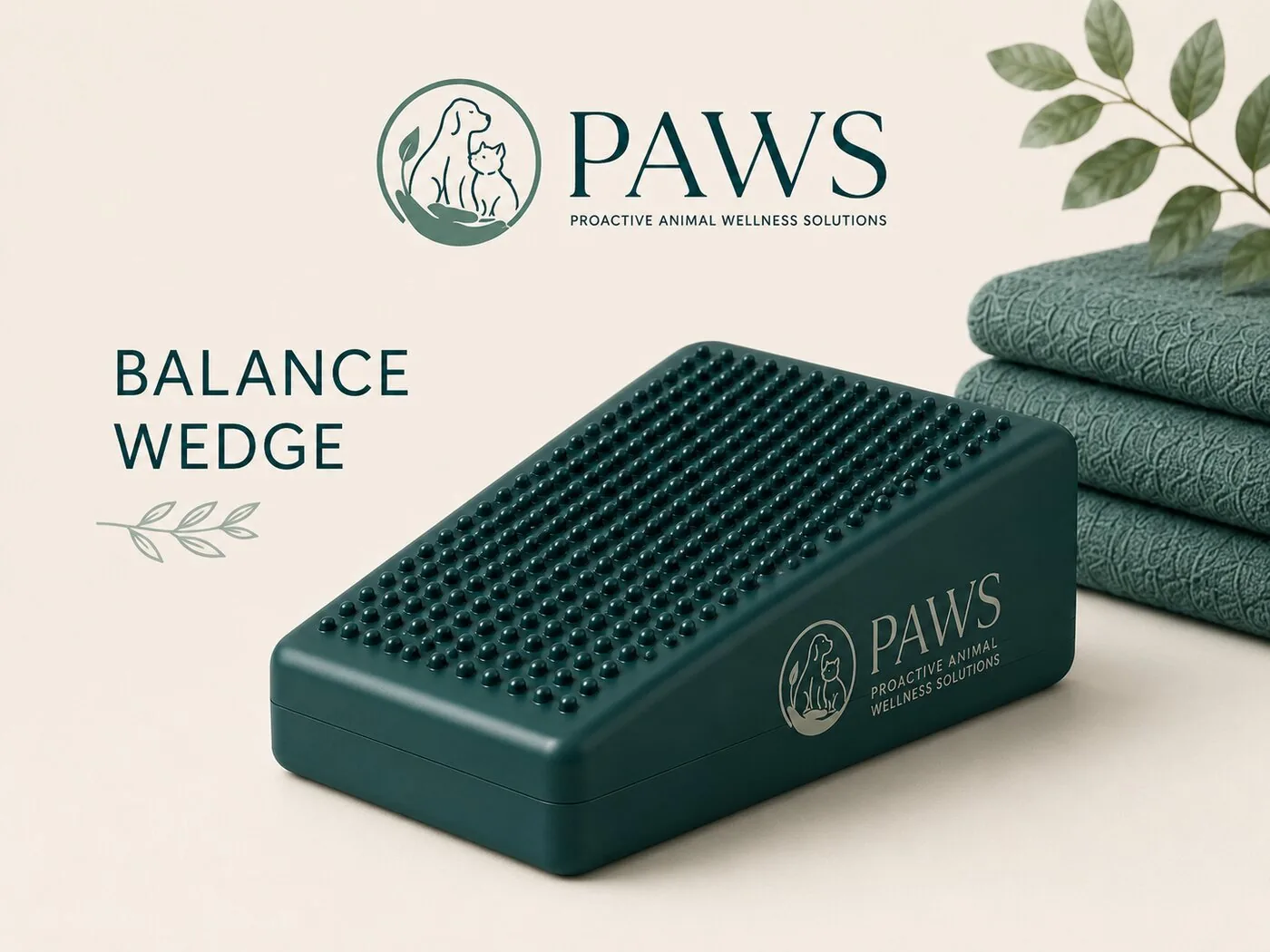
- A firm wedge, like the balance wedge. Its incline shifts extra load onto specific limbs, useful when your rehab plan targets the recovering leg.
- A low, stable platform, like the bone balance disc. Gentle enough for seniors and small dogs, and handy for everyday maintenance work long after recovery ends.
Introduce any of these with all four feet on the ground, reward calm standing, and keep sessions to a few minutes. Slow and boring is what progress looks like at this stage.
What about advanced equipment?
Physio rolls shaped like a peanut and rocker-style balance boards absolutely have a place, but that place is later. They demand more coordination and core control than most dogs have in the first two months after surgery. They make sense once your dog has finished formal recovery and you want to keep building fitness, or when a rehab professional specifically includes them in a program. Our balance equipment comparison breaks down which piece suits which stage, size, and goal.
What is mostly marketing?
A few categories rarely justify their price for an average recovery. Braces and orthotics bought online without professional fitting can do more harm than good, so involve your veterinarian if a brace is suggested. Home laser and light-therapy gadgets promise a great deal; if that type of therapy would help your dog, it is better delivered and dosed by a professional. Bundled supplement stacks are another common upsell. Some supplements have their place, but choose them with your veterinarian rather than from a recovery kit. And a supportive, washable bed does everything a luxury orthopedic bed does at three times the price for a recovering dog.
What order should I buy in on a budget?
If the budget is tight, spend in this order: traction first (non-slip mats), then confinement (crate or pen), then incision protection (cone or suit), then handling (harness, plus a sling for big dogs). That covers the phase when the most can go wrong. Add a ramp when movement resumes. Then, when your veterinarian approves strengthening around week 5, add one piece of balance equipment, and make it the disc with base if you want the most exercises per dollar. Everything else can wait until your dog proves they need it. Recovery rewards patience far more than it rewards spending.
Owners also ask
What is the single most important piece of recovery equipment?
Non-slip flooring, without much competition. A slip on hardwood or tile is one of the most common ways recovering dogs get hurt at home, and a set of inexpensive mats or runners removes most of that risk on day one. Cover the paths your dog actually walks: crate to door, crate to food, and any route with hard flooring.
Do I really need balance equipment for recovery?
Not in the first month, and never without your veterinarian's approval. From about week 5, once strengthening is cleared, a purpose-built piece like a disc on a stabilizing base makes home exercises safer and easier to progress than improvised cushions, which compress unevenly and slide. One versatile piece is plenty for most home programs.
Are dog ramps worth the money?
For most recovering dogs, yes, once movement resumes. Jumping in and out of cars concentrates impact on joints that are still rebuilding strength, and a ramp removes that stress entirely. It stays useful for life, particularly for large breeds, long-backed dogs, and seniors. Choose one with a non-slip surface and a gentle incline your dog will actually use.
When can my dog start using a balance disc?
Typically in weeks 5 to 8 after orthopedic surgery, and only after your veterinarian approves strengthening exercises. Start with the disc on a stabilizing base so the wobble stays small, reward calm standing for a few seconds at a time, and keep sessions under five minutes. If your dog seems sore afterward, stop and check in with your vet before continuing.
A training tool for dogs, not a toy. Always supervise your dog during use, check and trim nails before sessions, and consult your veterinarian before beginning any new rehabilitation or exercise program.
The equipment behind this guide


Dog Post-Surgery Recovery Checklist
Free printable checklist: how to prepare your home, week-by-week recovery reminders, and the warning signs that mean call your vet.